Getting around Egypt is simple once you match the right transport to each leg of the trip
Getting around Egypt is simple once you match the right transport to each leg of the trip
Getting around Egypt comes down to one rule: fly or take the sleeper train for the long jump from Cairo to the south, let the Nile cruise carry you between Luxor and Aswan, use a private car with a driver for everything at ground level, and open Uber or Careem the moment you step onto a Cairo sidewalk. Renting a car and driving yourself is the one option almost nobody should take. The country is a line along the river, distances are bigger than they look, and every leg has a right answer. This guide goes through each one, route by route and city by city.
Egypt is a line, not a blob, and that decides everything
Almost everything you came to see sits along the Nile, from Cairo and the Pyramids in the north down through Luxor to Aswan and Abu Simbel in the far south. Off to the east is the Red Sea coast with Hurghada and Sharm el Sheikh. Alexandria sits on the Mediterranean, a short hop north of Cairo. The rest is desert.
So only a handful of legs matter. Cairo to Luxor or Aswan is the long one, roughly 400 miles (about 650 kilometers) of river valley. Luxor to Aswan is about 135 miles (220 kilometers), the stretch the cruise boats sail. Cairo to the Red Sea is a half day by road. Aswan to Abu Simbel is a morning drive. Everything else is a taxi ride.
Domestic flights: the long jumps
For Cairo to Luxor, Cairo to Aswan and Cairo to Hurghada, flying is the default for most American travelers. The flight is about an hour, there are several departures a day on the main routes, and you land with the afternoon ahead of you.
The catch is everything around the flight. Cairo's airport sits on the far northeast edge of a city that takes an hour to cross, so a one hour flight is really a four to five hour door to door move. Book the earliest departure you can stand and a lost day becomes a lost morning.
Cruise sailing days and flight days must match, so we hold both together. Checked bag allowances on domestic legs are smaller than you may be used to, so one medium suitcase each is the safe choice.
Routes, timing and how flights slot into a cruise are in our guide to domestic flights in Egypt.
The sleeper train and the day trains
Egypt's railway runs the length of the Nile valley, and the line south from Cairo to Luxor and Aswan is the one you care about. There are two very different ways to ride it.
The overnight sleeper
The sleeper leaves Cairo in the evening and rolls into Luxor around breakfast, then continues to Aswan. You get a private two-berth compartment with fold-down beds, a washbasin, a tray dinner and breakfast, and an attendant who makes up the beds while you sit in the lounge car. It is old-fashioned, fun if you like trains, and it saves a hotel night. Two warnings: the ride is rough, so pack earplugs and an eye mask, and the timetable slips, so never schedule a temple for the hour you are due to arrive.
The daytime trains
Cairo to Luxor by day takes ten hours or more, most of a vacation day. Where the day train shines is the short Luxor to Aswan leg, three to four hours in a first class car with the Nile out of the window, and the fast Cairo to Alexandria run. Tickets should be booked ahead in winter, and we do that for you.
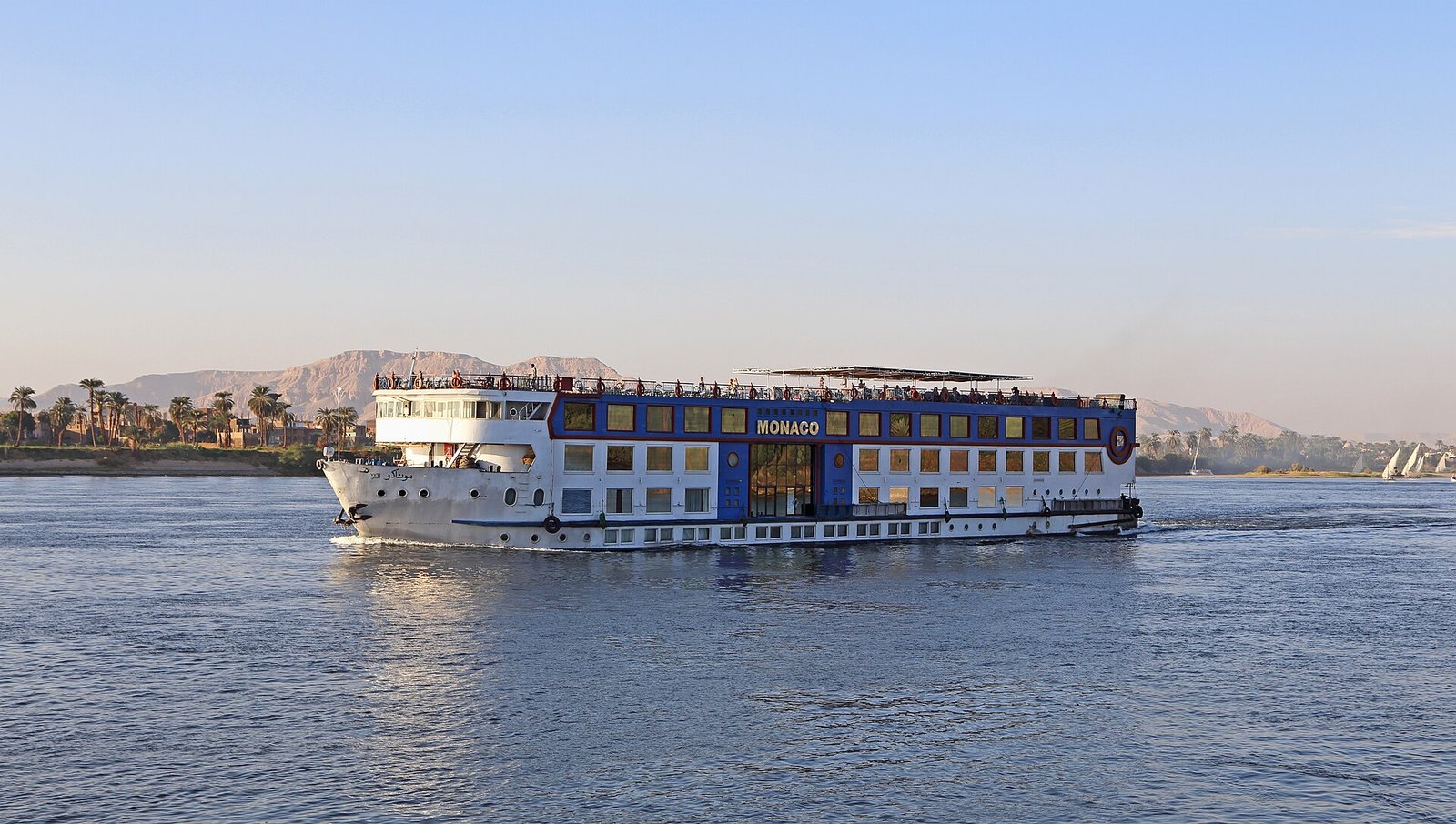
The Nile cruise is transportation too
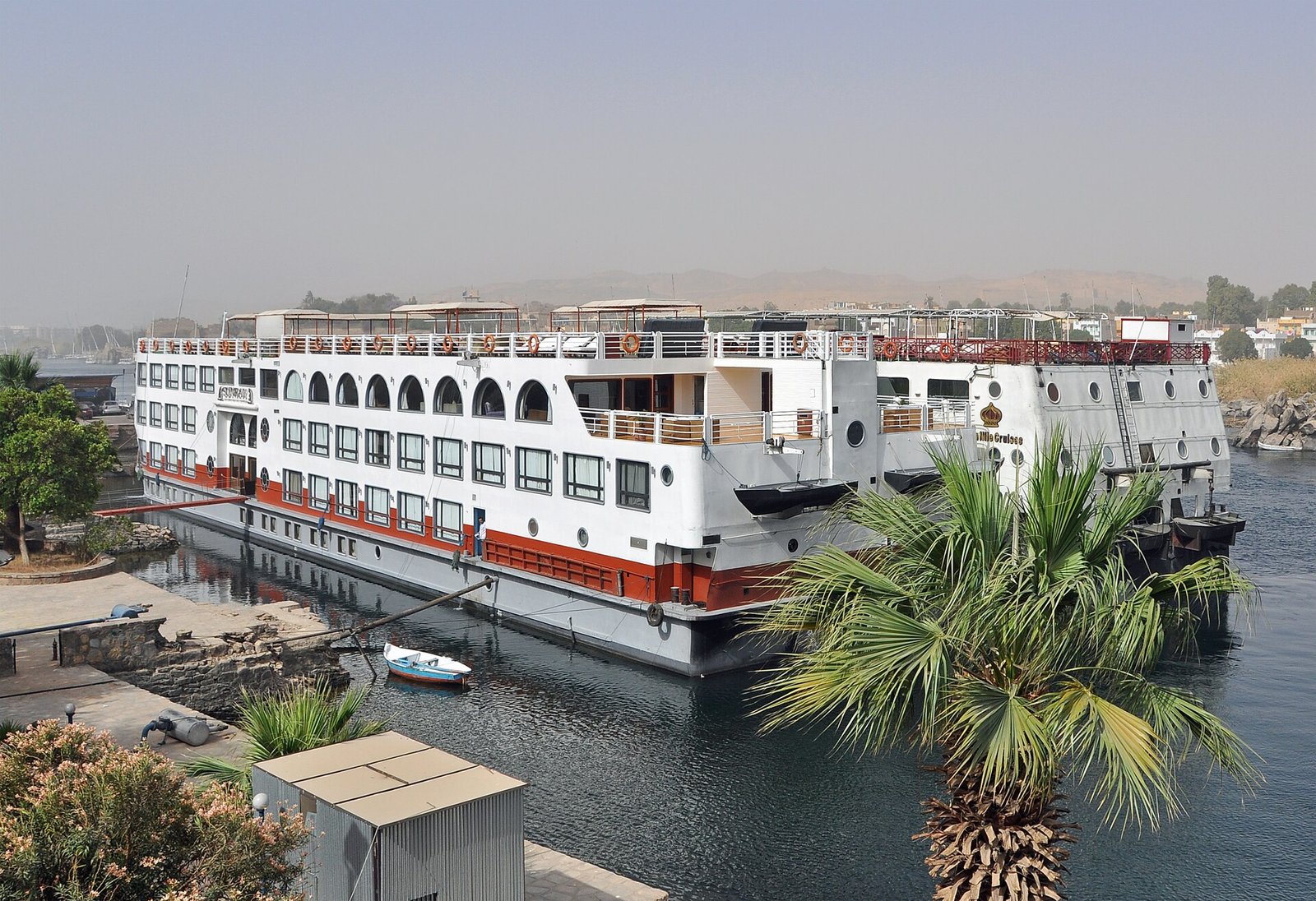
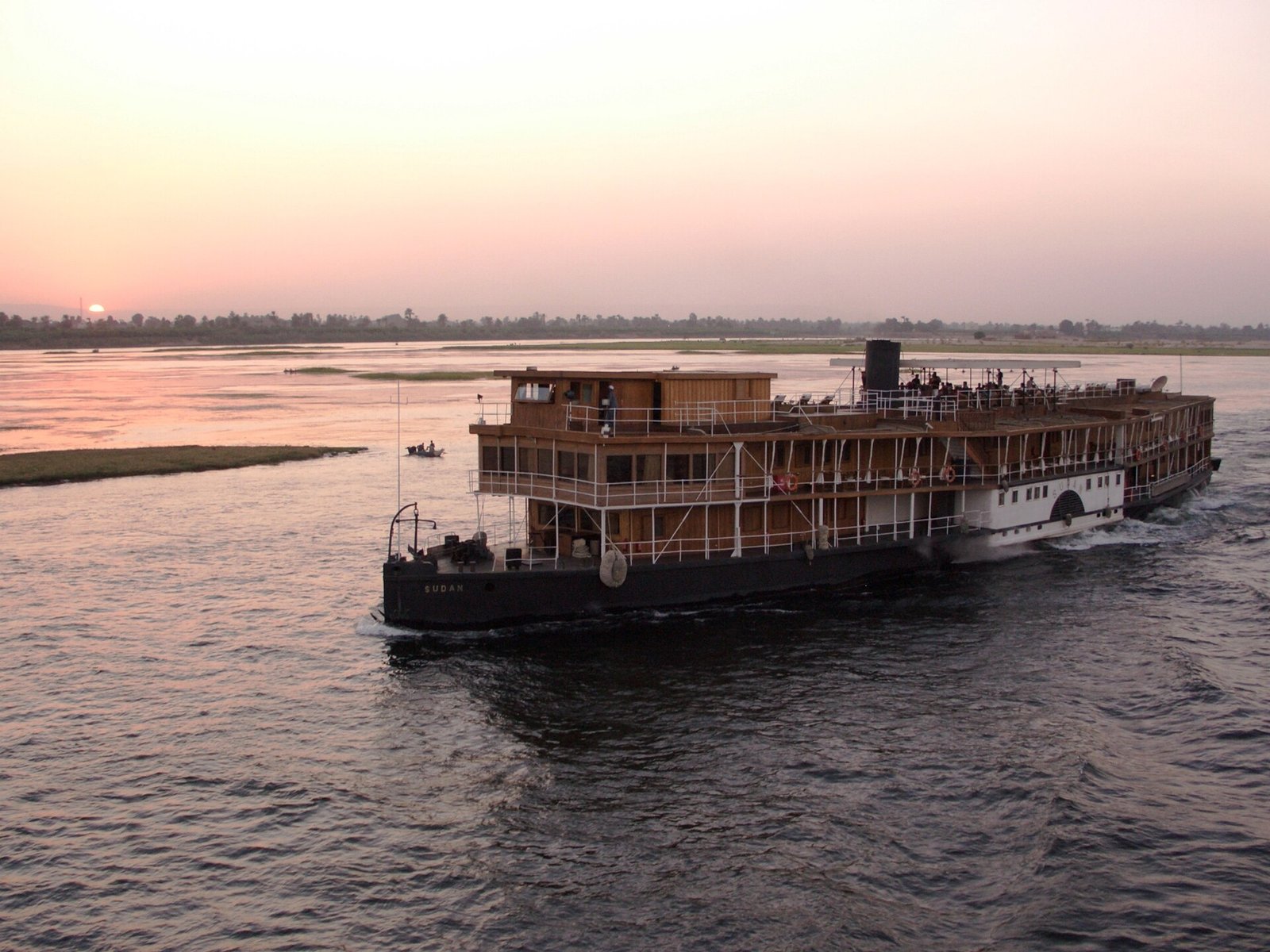
Americans file the Nile cruise under vacation and forget that it is also how you get from Luxor to Aswan, or back. Between those cities are the temples of Esna, Edfu and Kom Ombo, all built beside the river, and the boat moors at each so you can walk to the gate. Your suitcase stays in the cabin from boarding to the last morning. No packing, no early transfers, no hotel check-ins.
Standard boats do the leg in three or four nights, and a dahabiya, the traditional sailing houseboat, takes longer and stops at villages the big boats pass.
The one trap is direction. Boats sail Luxor to Aswan on certain days of the week and Aswan to Luxor on others, and the day you board fixes which flight or train you need on each end. That is the most common way itineraries get tangled, and it is the first thing we check. If you are weighing the boat against a hotel-based plan, read our comparison of a Nile cruise versus a land tour, and start with our main Nile cruise guide for the boats themselves.
Private car with a driver, and the road to the Red Sea
Everything that is not a flight, a train or a boat is a car with a driver. Not a rental. An Egyptian driver who knows the checkpoints, the gas stations and the one rest stop with clean bathrooms. In Egypt this is not a luxury add-on the way it would be at home. It is the ordinary way organized trips move, and it is how our own guides and vehicles work.
The Red Sea legs are where the car matters most. Cairo to Hurghada is five to six hours on a good desert highway. Luxor to Hurghada is about four hours over the mountains, the classic way to finish a Nile trip with beach days. Aswan to Abu Simbel is three and a half hours each way, done as a very early day trip.
Public buses run all of these routes with reclining seats and air conditioning. The problem is not the bus. It is the station at either end, the loose timetable and the stops that turn six hours into eight. On a two week vacation the private car wins.
Route by route: which transport wins
The whole country in one table. Times are rounded, because Egyptian timetables are suggestions.
| Route | Best option | Time | Also possible | Our take |
|---|---|---|---|---|
| Cairo to Luxor | Domestic flight | 1 hour in the air, 4 to 5 door to door | Sleeper train | Fly if time is short, sleeper for the experience |
| Cairo to Aswan | Domestic flight | About 1 hour 20 in the air | Sleeper train | Fly. The train arrives at lunchtime and eats the day |
| Luxor to Aswan | Nile cruise | 3 to 4 nights with temple stops | Car or day train, 3 to 4 hours | Cruise. The car is for people who have already sailed |
| Aswan to Abu Simbel | Private car at dawn | About 3.5 hours each way | Short flight | Car for most, flight if a long drive is a problem |
| Luxor to Hurghada | Private car | About 4 hours | Public bus | Car. Scenic road, and the bus adds hours |
| Cairo to Hurghada or Sharm | Domestic flight | About 1 hour in the air | Private car, 5 to 6 hours | Fly unless you want a desert road day |
| Cairo to Alexandria | Day train | 2.5 to 3 hours | Private car, similar | Train there, car back if you stop at sites |
| Inside Cairo | Uber or Careem | Depends on traffic | Metro, taxi | App for most rides, metro for the legs it covers |
Flights for the big jumps, the boat for the river, a car for the desert roads, apps in the capital. A well-built itinerary uses all four without you thinking about it.
Getting around Cairo: Uber, Careem, the metro and the taxi meter game
Cairo is a city of more than twenty million people with traffic to match, and for a visitor the ride-hailing apps changed everything. Uber and Careem both work here, both take the card on your account, and both show the fare before the car arrives. Install both before you land, because Careem, the regional app, often has the nearer car.
Drop the pin on a landmark a driver can find, expect a phone call to confirm where you are, and choose the comfort tier after dark. The rest, including airport pickup zones, is in our Uber and Careem in Cairo guide.
The metro
Cairo has Africa's oldest subway, three lines, and it is the one way to beat the traffic outright. Line 1 links the Coptic Cairo stop at Mar Girgis with downtown and the main railway station. Trains are frequent and packed at rush hour, the first two cars are reserved for women, and tickets are sold at station windows by distance. It does not go to the Pyramids and it is not for luggage.
Taxis and the meter
The white Cairo taxis have meters. Some drivers switch them on, some say they are broken, and some run one that has been persuaded to move faster. Say "meter" as you open the door, and if it does not go on, close the door and take the next one. There is always a next one. Otherwise agree the total for the whole car before you sit down.
From the airport, do none of this. A pre-booked transfer with a name sign is the calm way to start, and our Cairo airport arrival guide walks you through the hall.
Luxor and Aswan: horse carriages, motorboats, feluccas and the tuk-tuk reality
The two southern cities are small, the sights are split by the river, and the transport is part of their character.
Horse carriages
The calèche works the corniche in both cities and the road to Karnak. As real transport it is slow. As a sunset ride along the river it is lovely. Two checks before you climb in. Look at the horse: clean coat, no visible ribs, no sores, no limp. If anything looks wrong, walk away and say why. Then agree the fare for the full ride and the whole group before the wheels move.
Motorboats and feluccas
To reach Luxor's west bank you can drive round by the bridge, about half an hour, or cross by motorboat in five minutes with a car waiting on the other side. In Aswan the motorboats are the only way to Philae, the Nubian village and Elephantine Island. A felucca, the lateen-sail wooden boat, is transport only in the loosest sense, since the wind decides where you end up, and an afternoon sail around the Aswan islands is one of the best hours in Egypt. How to book one is in our felucca ride on the Nile guide.
Tuk-tuks
Auto rickshaws swarm the side streets of Luxor and every village. Fine for a five minute hop through a market, wrong for the airport or a temple on the edge of town. No insurance, no seatbelts, no fixed fare.
Boatmen and carriage drivers expect a little something, and our tipping in Egypt guide covers how much in one read.
Checkpoints on the road, and what happened to the convoys
Drive anywhere outside a city and you will meet police checkpoints. On the road to Abu Simbel, on the desert highways to the Red Sea, at the entrance to Sinai and at provincial borders, a barrier goes down, an officer looks in, the driver hands over his license and perhaps a passenger list, and the barrier goes up. It takes a minute. Sometimes you are asked for your passport, so keep it in your day bag, not in the trunk and not as a photocopy. Have it ready and do not photograph the post.
You may have read about tourist convoys. For many years, foreign vehicles on certain desert roads, notably Aswan to Abu Simbel, were grouped at fixed departure times and driven together with an escort. That system was wound down on the main tourist routes years ago, and today the Abu Simbel road is driven independently at whatever hour suits the itinerary. A few remote roads still require a permit, and your driver knows which.
What a private driver actually changes
People imagine the difference between doing Egypt alone and doing it with a driver as comfort. It is really time and attention.
- The day starts when you say. The car is at the door at six for the Valley of the Kings before the heat, or at nine if you want breakfast first.
- Every negotiation disappears. No fares, no meters, no cousin with a shop. The driver is paid by us, so his job is to get you where you want to go.
- The day becomes flexible. A crowded site gets swapped for the afternoon. A temple you love gets an extra hour.
- The heat is managed. In summer the desert roads run above 100 degrees Fahrenheit (about 40 degrees Celsius). A cold car with water waiting at the tomb exit is how you keep going.
Driving yourself does none of this. Cairo lanes are decorative, horns are a language and a foreigner at the wheel attracts every scrape. Outside the city it means checkpoints with nobody to talk to them and rural roads shared with donkey carts and unlit trucks.
How Explora Egipto moves you
We are a local agency in Egypt with our own guides and vehicles, and transport is the part of the trip we build first. When you send us your dates, this is what happens.
- We fix the cruise direction. Sailing days decide whether you fly to Luxor or Aswan, so the boat goes on the calendar first.
- We hold the domestic flights. Early departures matched to the cruise, with a driver on each end.
- We book the sleeper if you want it. Compartment reserved, tickets delivered to your Cairo hotel, driver waiting on the Luxor platform.
- We put a car and driver on every road leg. Cairo days, the Luxor west bank, Abu Simbel at dawn, the mountain road to the Red Sea.
- We meet you at the airport with a name sign, and we brief you on the apps for your evenings out.
Nothing on this page has a number next to it because every trip is different. Tell us what you have in mind and we send you the quote with every transfer, flight, train and boat spelled out. Our Egypt tour packages show the shapes most travelers start from.
Frequently asked questions
What is the best way to get around Egypt?
Match the transport to the leg. Fly or take the sleeper train between Cairo and the south, sail the Nile cruise between Luxor and Aswan, use a private car with a driver for desert roads and daily sightseeing, and use Uber or Careem inside Cairo. The trips that feel effortless combine all four without the traveler arranging any of it.
Is the sleeper train from Cairo to Luxor worth it?
Yes, if you like trains and can sleep through a rocking, noisy night. You get a private two-berth compartment with meals, you save a hotel night and you wake up in the south. Light sleepers and anyone short on days should fly. Many guests take the sleeper one way and fly the other.
Should I rent a car and drive in Egypt?
No, and this is the one piece of advice we give without hedging. Cairo traffic is chaotic, rural roads are shared with carts and unlit trucks, checkpoints expect a driver who speaks Arabic, and parking near the monuments is a negotiation. A car with a local driver removes every one of those problems. Ask us for the quote.
Do Uber and Careem work in Cairo?
Both work well across Cairo, Giza and the airport, and both show the fare before the car arrives, which ends the meter debate for good. Install both and pin your pickup on a landmark. Coverage is thin in Luxor and Aswan, where a hotel taxi or your agency driver is the better option.
Are there still tourist convoys on the road to Abu Simbel?
The fixed-time escorted convoys that once ran from Aswan to Abu Simbel were phased out on that route years ago. Today it is a normal early morning drive of about three and a half hours each way, with routine police checkpoints where the driver shows his papers and you may be asked for your passport. Keep it in your day bag.
How do I get from Luxor to Hurghada?
By private car over the Red Sea mountains, about four hours door to door. The road is good, the passes are striking and the driver handles the checkpoints. Public buses run the same route but add hours with stops and station waits. There is no useful train link, and flying means connecting through Cairo, which takes longer than the drive.
Let a local agency handle every mile
Write to us with your dates, who is traveling and what you most want to see, and we come back with an itinerary where the flights match the cruise, a driver is at every door and the only decision left is which app to open for dinner. No prices on this page, just a quote in your inbox.